
Is Your Dog Overweight? Here’s How to Tell and What to Do Next

If your dog is slowing down, getting tired easily, or just doesn’t move like he/she used to… it may not be age. It may be extra weight.
Most dogs I see are overweight. And unfortunately, most owners don’t recognize it.
Last week I saw a 1-year-old Labrador that weighed 92 pounds. He should have weighed closer to 75 pounds. He was obese.
The owner had no idea!
And that is not uncommon. When we see our dogs every day, the weight sneaks up slowly. A little extra here. A few more treats there. Less movement. More excuses.
Then one day your dog doesn’t jump up as quickly, he huffs and puffs more than he did last week, and everyone is calling him a “chunky monkey.” That’s your wake-up moment!
HOW DO YOU KNOW IF YOUR DOG IS OVERWEIGHT?
Ask yourself:
• Can you easily feel your dog’s ribs?
• Is there extra padding around the neck and shoulders?
• Has your dog lost their visible waistline?
• From above, does your dog look more like a bread loaf than an hourglass?
You should be able to see a waist. You should be able to feel ribs without digging through fluff. You should not see a walking bread loaf.
If your dog is huffing and puffing after:
• a leisurely walk
• going up the stairs
• retrieving the ball once
• a simple potty walk
…your dog is carrying too much weight. Overweight dogs are NOT cute!!
This isn’t about body shaming! It’s about mobility, longevity, and quality of life. Because overweight dogs don’t just carry extra pounds. They carry inflammation, joint stress, and metabolic strain—and they age faster.
IS YOUR DOG OVERWEIGHT?
When we see our dogs day in and day out, we sometimes don’t recognize that they are overweight. The weight sneaks up daily in small increments until someone, usually your vet, comments on your dog’s body weight.
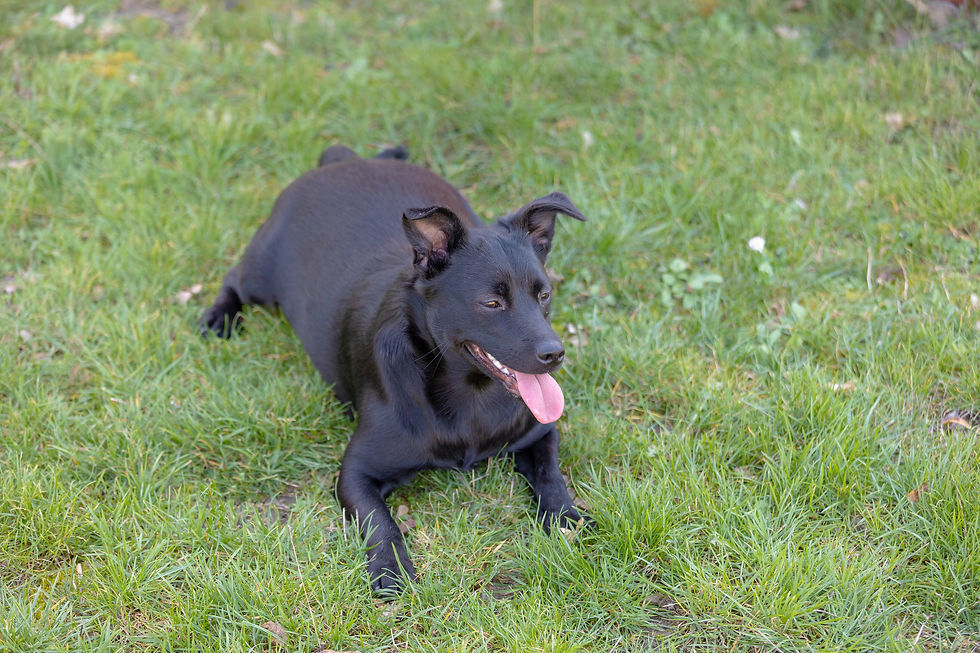
So here are some photos to give you an idea of what is considered overweight.
Let’s start with the obvious:


But here are photos of dogs, you may not realize are overweight...yes!!! Even show dogs are overweight now a days!
In the below examples, can you see:
The roundness of the trunk?
The extra weight around the neck and shoulders?
The sagging belly?
The bread loaf look of the body? No waist!!
And the extra padding over the ribs?
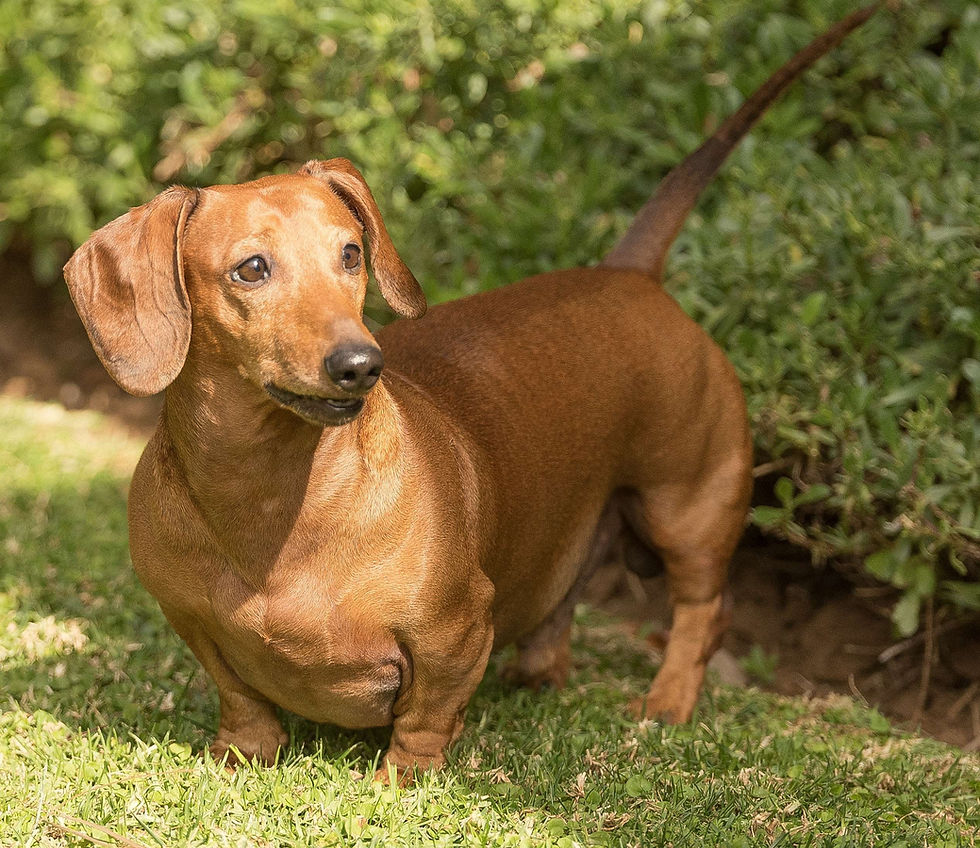

Here is what ideal body weight looks like:


You can see a waist. The tummy is tucked up. And when you run your hands over the dog, you can feel the ribs (the rib outline is slightly visible). In addition, you don’t see any fat rolls around the neck or shoulders.

WHY DO DOGS GAIN WEIGHT?
The biggest reason for weight gain is that your dog is consuming more calories than (s)he is burning. When you add up the calories your dog should be eating and comparing that amount to the calories he is actually eating, you’ll be shocked.
We are used to scooping dog food into our dog dishes TWICE a day. Some people even leave food out for their dogs all day long. If I was allowed to eat to my heart’s content all day long with only a short walk to the mailbox and back, I’d be as big as a house too!
Then comes the classic excuse: “My dog is always hungry.” Well, um NO! Your dog is begging. And begging is a learned behavior.
Here is how that happened: Your dog sat next to someone during dinner. Big brown eyes. Intense staring. Drool dripping on the floor. Emotional blackmail in full force. And someone caved. One little bite. Success!!!!
Now your dog knows exactly how to run that program every single day. And THAT is how a professional food beggar was created.
Remember this is how your dog gains weight:
Calories matter (too many calories eaten = an overweight pooch)
Treats add up fast (treats = more calories)
Begging is a learned behavior
Movement is often inadequate (potty walks just don't cut it)
HOW MUCH SHOULD YOUR DOG EAT?
This is a great question, and it comes down to how many calories your dog should consume in a day.
So as not to bog you down with a long formula, I’ve created a Dog Calorie Counter. You just put in your dog’s current weight and your dog’s ideal weight. The calculator will automatically figure out your dog’s total calorie count for the day. Then you just have to look at your dog food bag, find the calories per cup, and figure out how many cups you should be
feeding.
Here is the link to the calculator: https://www.beyondvetmed.com/calorie-calculator
WHAT TO DO NEXT
1. Figure out Daily Calories for intended body weight
2. Measure food
3. Cut treats out or back DRASTICALLY
4. Stop begging patterns
5. Walk with purpose
6. Build strength
And if you want help beyond food and walking—especially if your dog is stiff, weak, or struggling to move—this is where chiropractic care and movement-based therapy can make a real difference.
__________
If this helped you see your dog a little differently, you’ll want to be on my list.
I share practical, real-world insights on dog health, movement, and longevity—shared the way I do with my own clients.
Join BeyondVetMed Insider here: https://sendfox.com/lp/3epzqp
And if you know someone with a dog who could benefit from this, feel free to pass it along.
— Dr. Heike Jung
Veterinarian • Animal Chiropractor
Beyond Vet Med


Comments